
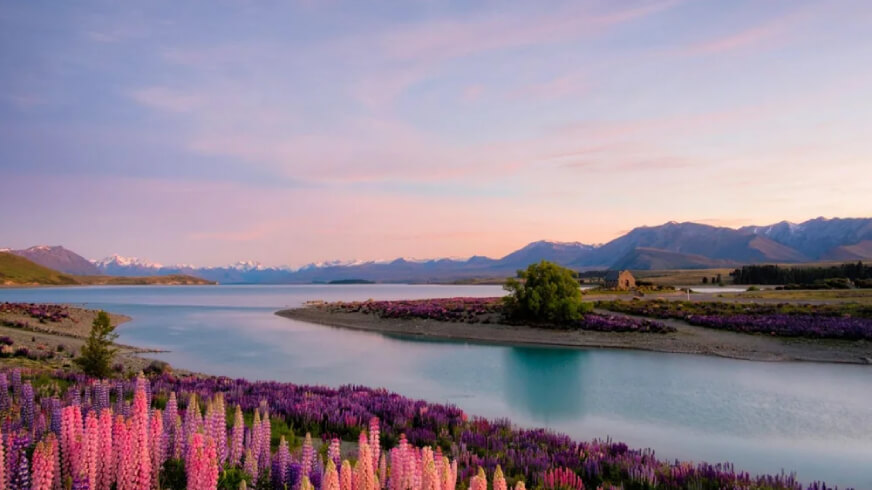
The best time to visit New Zealand largely depends on the type of holiday experience you want, as each season unveils its own unique charm for travelers seeking nature, adventure, or quiet escapes.
Summer: December to February
Summer is the peak tourist season in New Zealand, known for its warm, sunny weather and long daylight hours. Temperatures average between 20°C to 25°C, making this the ideal time for activities like hiking, surfing, and beach visits. Popular destinations such as Queenstown, Rotorua, and the Bay of Islands come alive with festivals, vibrant events, and excellent opportunities for water sports. It’s best to book in advance, as accommodation fills quickly during these months.
Autumn and Spring: March to May & September to November
Autumn (March to May) paints the landscapes in stunning hues of gold and red, offering quieter roads and fewer crowds. This is perfect for vineyard tours, hiking, and wildlife watching, with comfortable, mild weather typically around 14°C to 19°C. Spring (September to November) brings burst of flowers, newborn lambs, and flowing waterfalls, providing great conditions for trekking and scenic drives. Both seasons are excellent for travelers seeking more affordable options and tranquil experiences.
Winter: June to August
Winter is prime time for snow sports in the South Island, with ski resorts in Queenstown and Wanaka bustling with activity. While some areas can be cold and rainy, others, like Rotorua, still offer mild and enjoyable weather for sightseeing and relaxation. For those who love skiing and cozy mountain retreats, winter is a rewarding option.
No matter the season, New Zealand’s diverse landscapes and vibrant experiences promise an extraordinary adventure for every traveler.

